Article
Home > Article
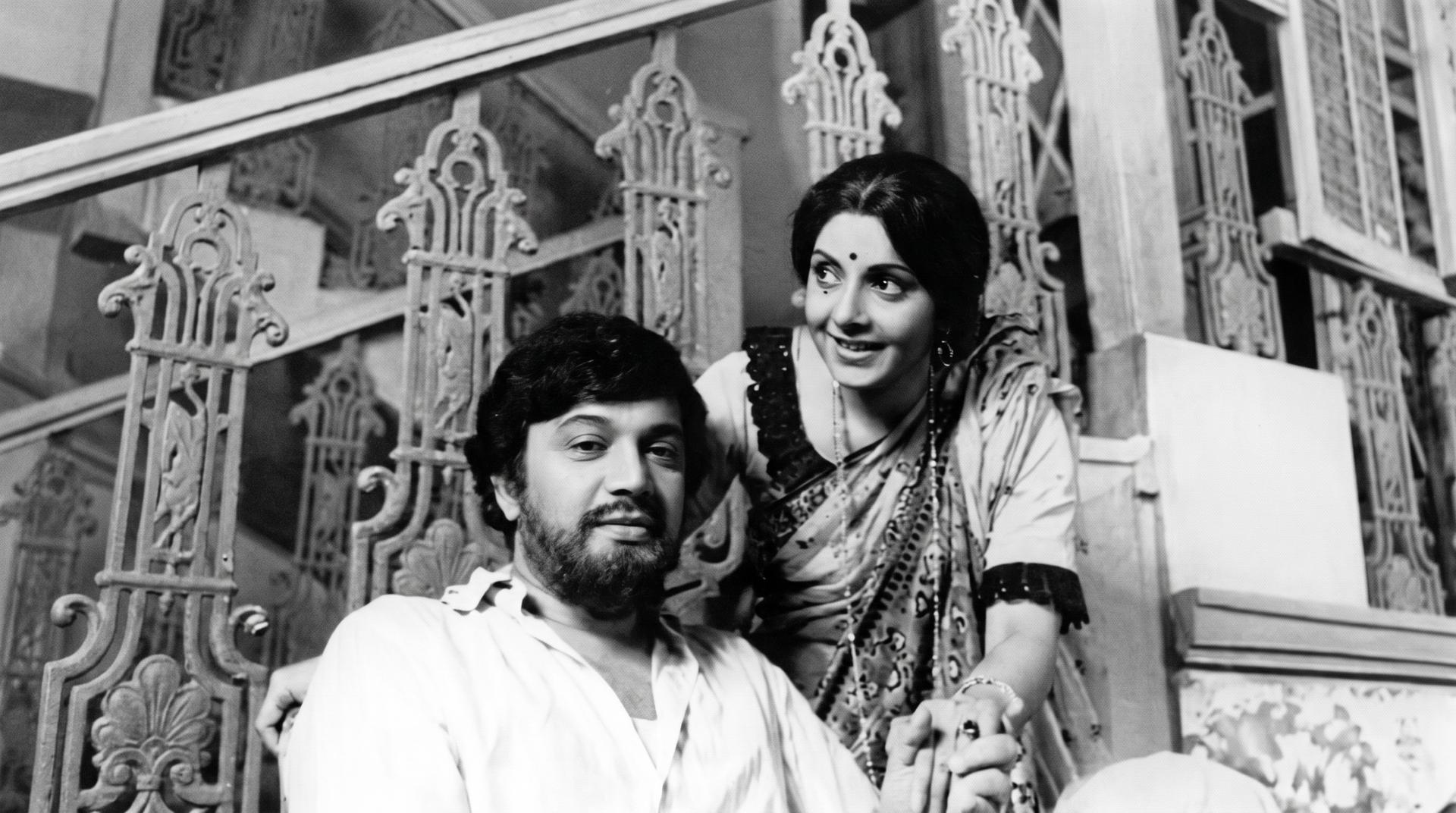
From nearly stepping into Sharmila Tagore's shoes for Satyajit Ray's Apur Sansar (1959) to finally making her Ray debut with Jana Aranya (1976), Lily Chakraborty has come a long way. This year marks 50 years of the release of Jana Aranya, and the 84-year-old actor has built an incredible body of work across industries. From braving 4:00 AM full-body darkening makeup for Tapan Sinha to having her intense scenes with Sanjeev Kumar chopped due to a Bollywood co-star's insecurity, she has truly seen it all. Navigating monumental eras with unmatched grace, the veteran actress tells AMRITA MUKHERJEE why she remains cinema's most effortlessly grounded titan.
Why BFA commissioned this piece:
The 84-year-old actress made her screen debut in 1958 with "Bhanu Pelo Lottery". Over nearly seven decades, she has accumulated a treasure trove of memories—some of which have never been shared before. We wanted her to talk not just about titans like Uttam Kumar, Gulzar, Tapan Sinha, and Hrishikesh Mukherjee, but about the deeper, unarchived corners of her career. This includes heartwarming familial bonds she forged in Mumbai with producers like NC Sippy who called her Badi Beti.
Unearthing such nuanced history requires a specific blend of persistence and literary empathy. Who better to navigate these unspoken eras than a veteran journalist-turned-author? Amrita Mukherjee kindly agreed to our request, beautifully drawing out Chakraborty's signature, unpretentious candor. This long-form interview is a vital piece of historical preservation — capturing the grand canvas of Indian cinema through the eyes of an artist who lived it.
Tucked away in a quiet corner of Dum Dum, stands a four-storey apartment building. The pond in front and the green patch next to it, add that serene touch to the area. As the e-rickshaw pulled up in front of the building the driver announced, “This is the house you are looking for. This is where Lily Chakraborty lives.”
Everyone knows her in her para (locality) not only as an actress but more as a down-to-earth person who interacts with everyone. This is an identity Lily Chakraborty carries with her wherever she goes. Be it in the film industry or beyond it, all people have for her is immense respect. She didn’t have to work for this, ever. Her genial temperament, affectionate disposition and unpretentiousness did it for her.
When you walk into her apartment and see the photos on the red walls of her sitting room, the realization that she had worked with almost every stalwart of Bengali cinema, hits you.
She will be completing 70 years in the film industry in two years. Despite such a long career graph and 500 films behind her, her eyes still light up with excitement when she talks about her next film. At 84, the actress believes that she keeps working because roles still come her way and with pride, she reveals that in her entire career she has never looked for work, it always landed in her kitty. This was mainly because people liked her effortless acting style. Initially it was word-of-mouth that fetched her roles in theatre and then the same process worked for films.
Never someone to throw tantrums on the sets, arrive late or refuse to join rehearsals, it has always been her grounded attitude and professionalism that has been lauded both in Kolkata and Mumbai. She even did a powerful role in a successful Malayalam film named Priya.
From Uttam Kumar to Amitabh Bachchan to Prosenjit, from Satyajit Ray to Hrishikesh Mukherjee and Gulzar, she has worked with all. She has done interesting roles with contemporary directors like Srijit Mukherjee, Shiboprasad Mukherjee, Nandita Roy and Kaushik Ganguly.
In a tête-à-tête with Bengal Film Archive, the actress tells us about her long innings in cinema, how she attained her acting prowess, what was it working with the stars and what she thinks of the current crop of directors and actors in Tollywood.
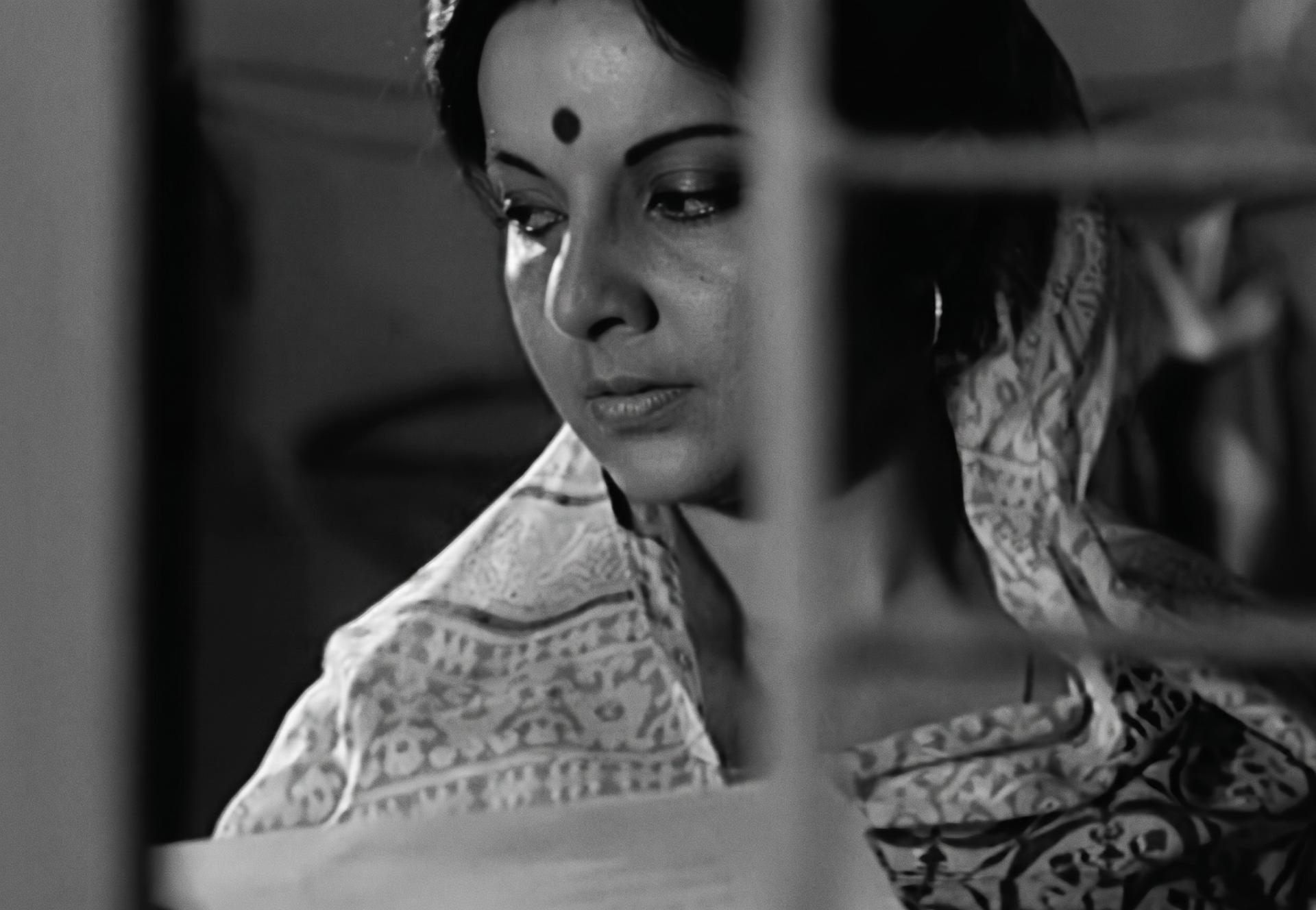
Did your life become a struggle when you came to Kolkata?
I was only five years old and the year was 1946-47 when we shifted to Kolkata from Dhaka. My father was struggling to earn that’s why my boromama (uncle), who was a surveyor in a coal mine in Madhya Pradesh, asked us to shift there. I joined the Penchville High School but within a couple of years my father decided to return because he could not adjust to speaking Hindi. My younger brother and I stayed back because we did not want to disrupt our studies, the rest of the family came back.
We lived in a beautiful place in Madhya Pradesh and I enjoyed my life there. Two vans would come and screen films and I would run to watch it. From a very young age I was interested in films and often dreamed of facing the camera one day. I really liked Dev Anand and watched his film, Jaal, at least 7-8 times.
Did you get to meet Dev Anand when you started working in Mumbai?
Yes. Prabhat Roy was working as an assistant director in Mumbai then and he knew how much I liked Dev Anand. So, he took me to the sets and introduced me to him. He was nice to me but I was a trifle disappointed because I didn’t find him as handsome in real life, as he was on screen. He had aged a bit then and did not have the good looks of his youth anymore.
My mother taught me the nuances of acting. She was very good and later when she joined Nandikar in Kolkata, she had got accolades for her acting prowess and worked with Ajitesh Bandopadhyay in a number of plays. But sadly, I had become a very busy actress then and could never go to watch her on stage
Did you have the ambition that you will be a film star one day?
Not really. As I told you I loved films and even imagined myself to be in a heroine’s shoes but I never really harboured the ambition of becoming an actor. While in Madhya Pradesh, my mother, Dipali Chakraborty, organised functions with us on festivals or on Rabindra Jayanti. She used to stage plays, and we acted in those. My mother taught me the nuances of acting. She was very good and later when she joined Nandikar in Kolkata, she had got accolades for her acting prowess and worked with Ajitesh Bandopadhyay in a number of plays. But sadly, I had become a very busy actress then and could never go to watch her on stage.
When I came to Kolkata, I joined Office Club and I did plays where I was Madhabi Mukherjee’s younger sister. My elder sister was also doing theatre then and I had gone to the rehearsals with her. There someone offered me a role in a film and without a second thought, or asking about the role or the film, I said yes. Later my sister rebuked me that I went ahead and gave the nod without asking my parents. That is how my debut film, Bhanu Pelo Lottery, happened in 1958.
Despite getting a break in films you continued on stage…
Yes, very much and a for a long time. I started doing commercial theatre and was a regular at Star Theatre, I can say I worked with all the stalwarts. I did the play, Dak Banglo, with Chhabi Biswas and Sandhya Roy. Namjibon with Soumitra Chatterjee was a huge hit. We did the play, Atmakatha, together even five years before Soumitrada passed away. He was always very affectionate towards me and was elated when I agreed to do Namjibon, which firmly established him on stage.
I continued doing theatre all through my career. They used to give me leave, accommodate my travels to Mumbai and always wanted me back even if they had found a temporary replacement. This was a big thing for me. Except for a phase when I got too busy with films, I have always been on stage.
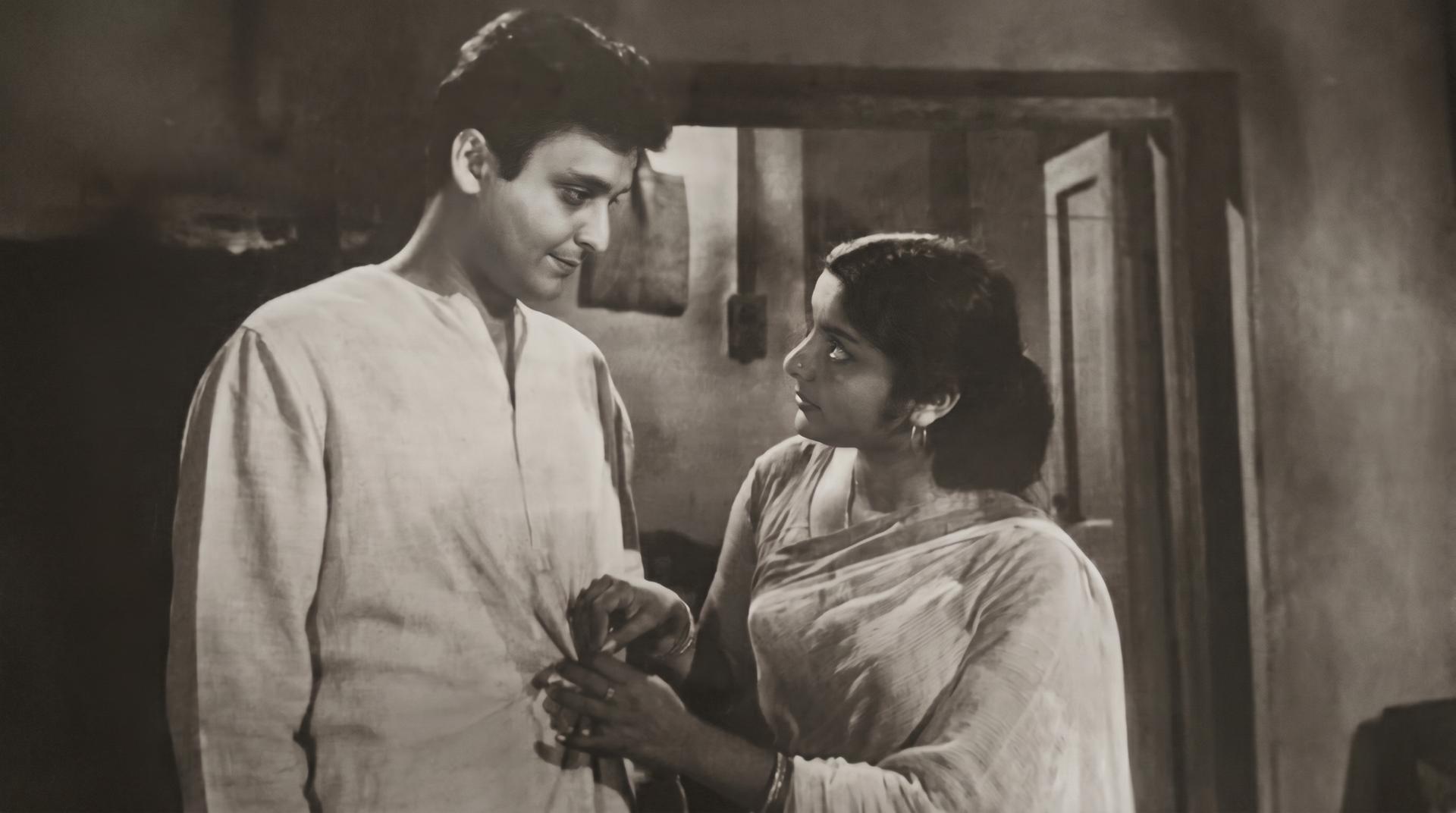
You have worked in multiple films with Uttam Kumar. Can you tell us about your working experience with him?
Bipasha, Dewa Newa, Dui Purush and Bhola Moira are some of the films I worked with him. He had a great sense of humour and used to treat the whole unit like his family. He used to say: “Lily eto shabolil amra ghabrey jaai (Lily is so effortless we get frazzled).”
I remember I had just started eating paan then and was getting initiated to jarda. I didn’t know how strong it could be. Both Supriyadi (Surpriya Devi) and I had ordered jarda pan and I became over enthusiastic and had extra jarda. Instantly I started feeling unwell. I got everyone on their toes; someone was fanning me, someone was getting me water. There entered Uttam Kumar. He saw the mayhem, very quietly stood next to me and said, “Shojjho jakhon hoyna khawa keno? (When you can’t digest it, why do you need to have it?)” just like an elder brother and left.
I remember we were shooting for Bhola Moira and I was playing his wife in the film. There was a scene where he was supposed to hug me. The scene got over and he kept hugging me, saying, “Now I won’t let you go.” I called Supriyadi, who was also on the sets, and he joked, “Supriyadi can’t save you, you are my on-screen wife now.” We all laughed.
He had a great sense of humour and used to treat the whole unit like his family. He used to say: “Lily eto shabolil amra ghabrey jaai (Lily is so effortless we get frazzled)”
How did you get your first break in Satyajit Ray’s Jana Aranya?
Actually, Ray had called me during Apur Sansar when there was some issue with Sharmila Tagore’s school and they were not giving her permission for a prolonged shoot. He was looking for an alternative, in case he had to replace her and that’s when he had called me. He had told me very honestly the reason I was there and I was totally okay with that. I had decked up as the young wife and he liked me very much. But Sharmila continued. That was around 1958.
Then in 1976 he called me for Jana Aranya. I was elated. I had cut my hair a bit short and I wore a wig in Jana Aranya and Ray wasn’t sure that it looked natural. So, on the first day he kept looking at me and touching the wig to check everything was in place. He was a complete stickler for perfection. After the first few shots he became convinced it was fine and did not bother about the wig after that.
Again, he called me after 15 years of Jana Aranya for Sakha Prosakha. The moment I walked in he said, “I had heard you have put on weight but you have not. The way you are now you will completely look the part as the boro bou in my film.”
If he had felt I needed to lose weight I would have shed it in a few days. I was ready to do anything for him. Ray gave so much respect to all of us. He never said that the shot didn’t go well or you should do better in the next shot. He would always say, “I made a mistake, can we do another shot?”
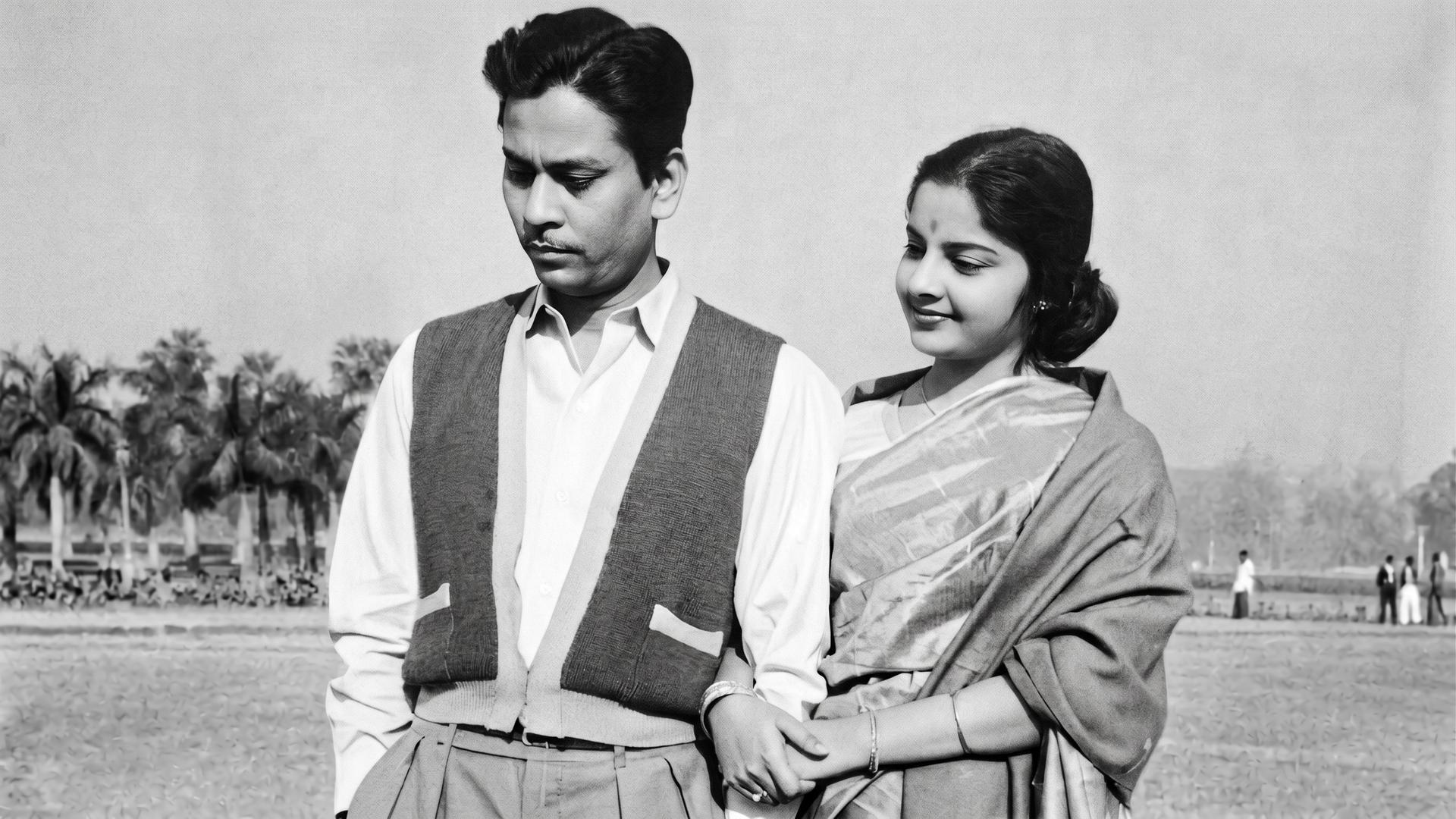
Lily Chakraborty with husband Ajit Kumar Ghosh
Apart from Ray you have worked with some of the greatest directors of Bengali and Hindi cinema, can you share your working experience with them?
Mrinal Sen
I first worked with him for a television serial; I do not remember the name. Then he called me for Ekdin Achanak. He never told me how to emote. He always gave me the freedom to do as I liked. Both Ray and Sen were very organised and knew exactly what they wanted. Both gave the artists a lot of respect.
Tapan Sinha
I was working in the film Ahwan with Anil Chatterjee and he took me to meet Tapan Sinha. He was such a gentleman that the moment I walked into his office he stood up and greeted me with folded hands. He initially thought I was a bit too fair for the role of a Santhal girl in Hansuli Banker Upakatha but he gave me the role saying my skin colour could be darkened.
When shooting started I had to start applying the darkening make-up all over my body at 4am. Then when it got over, on a cold night, I had to take an elaborate bath to scrub it off. It was not easy, but I was always ready to go the extra mile.
Tarun Majumdar
I knew Rakhee’s ex husband journalist-turned-director Ajay Biswas. When I went to Mumbai, he took me to meet Tarun Majumdar. He read out the entire script to me. I liked it so much that I immediately said yes. It was Phuleshwari starring Sandhya Roy in the lead. It became a runaway success.
I was shooting for his film in Mumbai then when Ray sent me a letter with an offer to work in Jana Aranya. He told me, “We will wait, you first go and do Ray’s film.” I immediately rushed to Kolkata. This was the kind of support I got from him
Hrishikesh Mukherjee
I have done films like Alaap and Chupke Chupke with him. He always encouraged me a lot. I was shooting for his film in Mumbai then when Ray sent me a letter with an offer to work in Jana Aranya. He told me, “We will wait, you first go and do Ray’s film.” I immediately rushed to Kolkata. This was the kind of support I got from him.
Pijush Bose
He directed me in Bhola Moira and Dui Prithibi. He was a theatre artiste and belonged to the Natto Goshti. He was a brilliant actor and we would watch him on stage, mesmerised. He was a brilliant director too.
Sushil Mukherjee
He directed me for Dui Purush. I remember an actress was shooting with him and she had a scene where she had to cry. There was no glycerine in those days so the tears had to come naturally and she couldn’t manage that. Suddenly Sushil Mukherjee gave her a tight slap and said let’s take the shot now. She was crying profusely.
I got so scared seeing this, I thought if ever I couldn’t cry would he also slap me? Thankfully nothing of that sort ever happened.
Gulzar
I had gone to director-lyricist Mukul Dutt’s place who was married to famous actress Chand Usmani, and their house would always reek of fish being cooked. Usmani had learned cooking maccher jhol because he loved it. He told me Gulzar saab wanted to see me. Gulzar saab sent his car and I went to his office. It was a busy space so he took me to another room and told me that I fitted the role perfectly and he had seen me in Deya Neya. He spoke to me in Bengali but then suddenly it occurred to him that he didn’t know how well I spoke Hindi.
I started speaking in Hindi and he was so impressed. He asked me, “How are you so good? Sharmila and Rakhee both have a Bengali accent when they speak Hindi.”
I told him about my childhood in Madhya Pradesh. That’s how I signed my first Hindi film, Achanak (1973), opposite Vinod Khanna which was based on the infamous KM Nanavati case. Later he cast me in Mausam (1975) too.
When I left, I spotted a pair of high heels lying in the room. I instantly knew those belonged to Rakhee.
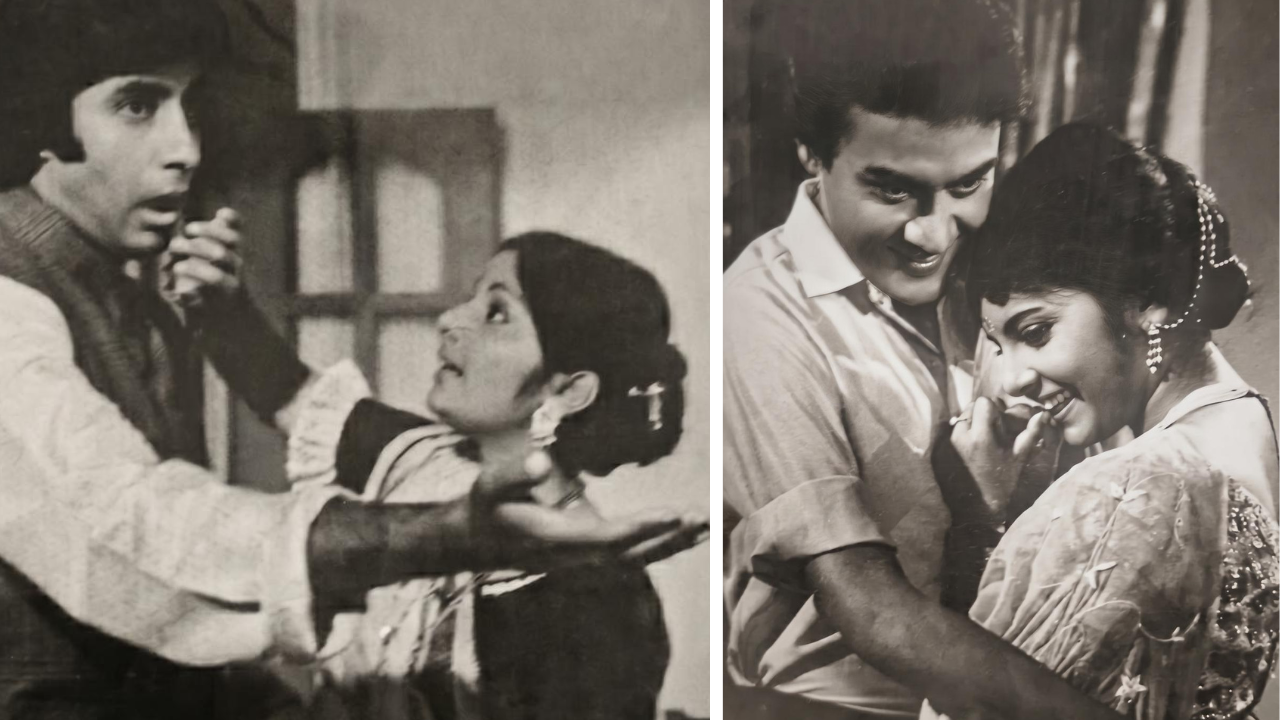
(Left) Lily Chakraborty with Amitabh Bachchan in 'Alaap'; Lily Chakraborty with Subhendu Chatterjee in 'Bhanu Goenda Jahar Assistant'
Did you know Rakhee well and did she put in a word for you?
I knew her extremely well. I knew her from the time she came to Kolkata from Ranaghat with actress Sandhya Roy. Then she married journalist Ajay Biswas. Sometimes Ajay would drop her at our Bagbazar home because she would get bored at her home alone and preferred to spend time at our place. She treated Ajit, my husband, like her elder brother. Once my husband read her palm and told her she would have a lot of money one day.
We used to go on an annual picnic from our locality to Victoria Memorial Hall. Rakhee came with us.
Ajay moved to Mumbai and she moved with him. She met my husband in Mumbai and told him that she was unhappy in the way Ajay was trying to use her to find his way in Mumbai. Soon they parted ways and Rakhee’s career took off in Mumbai. Then she married Gulzar saab. Apparently after Gulzar saab chose me, she had told him that I was good.
Now we are not in touch. Rakhee comes to Kolkata to shoot for Bengali films but she has not got in touch with me ever. While I have remained the same person, people change. I feel a little wary about reaching out and re-establishing old connections because I don’t know how people will respond.
How have you managed to stay so grounded and consistent despite having such a rich body of work?
That’s who I am. I have never let my success go to my head and remained very consistent always. If someone greets me, they can be sure that I will greet them back with the same warmth. I have never created any issues for directors or producers. Perhaps that’s why I never had to go looking for work, people always came to me with roles. They know I will deliver with professionalism.
People get dropped from films in the last moment. Has that ever happened to you?
Thankfully that has never happened to me. However, my role has been chopped. This was a film with Sanjeev Kumar where he really liked my acting and we had a number of intense scenes together. The heroine apparently became insecure about my acting and ensured that most of my scenes were chopped off. It was very disappointing for me.
Also, I have faced payment issues. I have lost count of the number of times I have not been paid. Since I never bothered much about money, I never followed up the failed payments too.
For a long time, we did not know that my father was earlier married to my aunt and three of our siblings were my aunt’s children. After her death, the family decided to marry off my mother to him
You made your debut with Bhanu Bandopadhyay. Can you tell us about him and actors like Samit Bhanja, Dilip Roy and Subhendu Chatterjee with whom you have worked?
In Bhanu Pelo Lottery, I didn’t have any scenes with Bhanu Bandopadhyay but later I did films like Bhanu Goenda Jahar Assistant with him. He was very funny and he used to keep us totally entertained in outdoor shoots. He was very affectionate and protective too. He always behaved like he belonged to the production team and saw to it that we were taken care of. It was something he didn’t have to do, but did very spontaneously.
Subhendu Chatterjee was a very nice man and I have done Bilkis Begum with him at Bijon Theatre. But sometimes he used to get perturbed on stage if he thought the actor/actress opposite him was not delivering the dialogues properly. Then he would keep saying “dhur”. Even the audience could hear that. That was a bit hurtful for actors working with him.
Samit Bhanja was a very warm and extroverted person. While shooting for the film, Kedar Raja, we were staying in their house in Tamluk. Samit was in theatre then. Kedar Raja had a bit role of a police officer and he was asked to do it. He readily agreed. That was actually his film debut.
Dilip Roy was a very warm and friendly person and he had no arrogance or never threw any tantrums. He was a very close friend of my husband and we were actually family friends and visited each other’s homes. I did the play Rajodrohi with him that was a superhit. In the last scene where he would be hanged, he was absolutely brilliant and people flocked to the theatre to watch the play.
How is it working with the new crop of directors?
I really enjoy working with them. While doing Rajkahini, Srijit Mukherji used to have rehearsals. I always reached on time and he would tell others, who came late or didn’t turn up, that I set an example of dedication even at this age.
Rituparno Ghosh, during the making of Chokher Bali, called me “tui” but his mother disapproved of it because I am so much older to him. I thought it was cute and his way of expressing his affection.
With Kaushik Ganguly I have worked in Khad, Ardhangini and Ajogya. He is a very well-organised director and Shiboprasad and Nandita took a lot of care of me when I did Posto with them in 2016. I worked in Familyawalah with Suman Ghosh recently, and enjoyed the experience immensely.
Sometimes after a shot, the young directors ask me if I think it was fine. If I suggest something they readily accept it. This respect they have for me and I really cherish that.
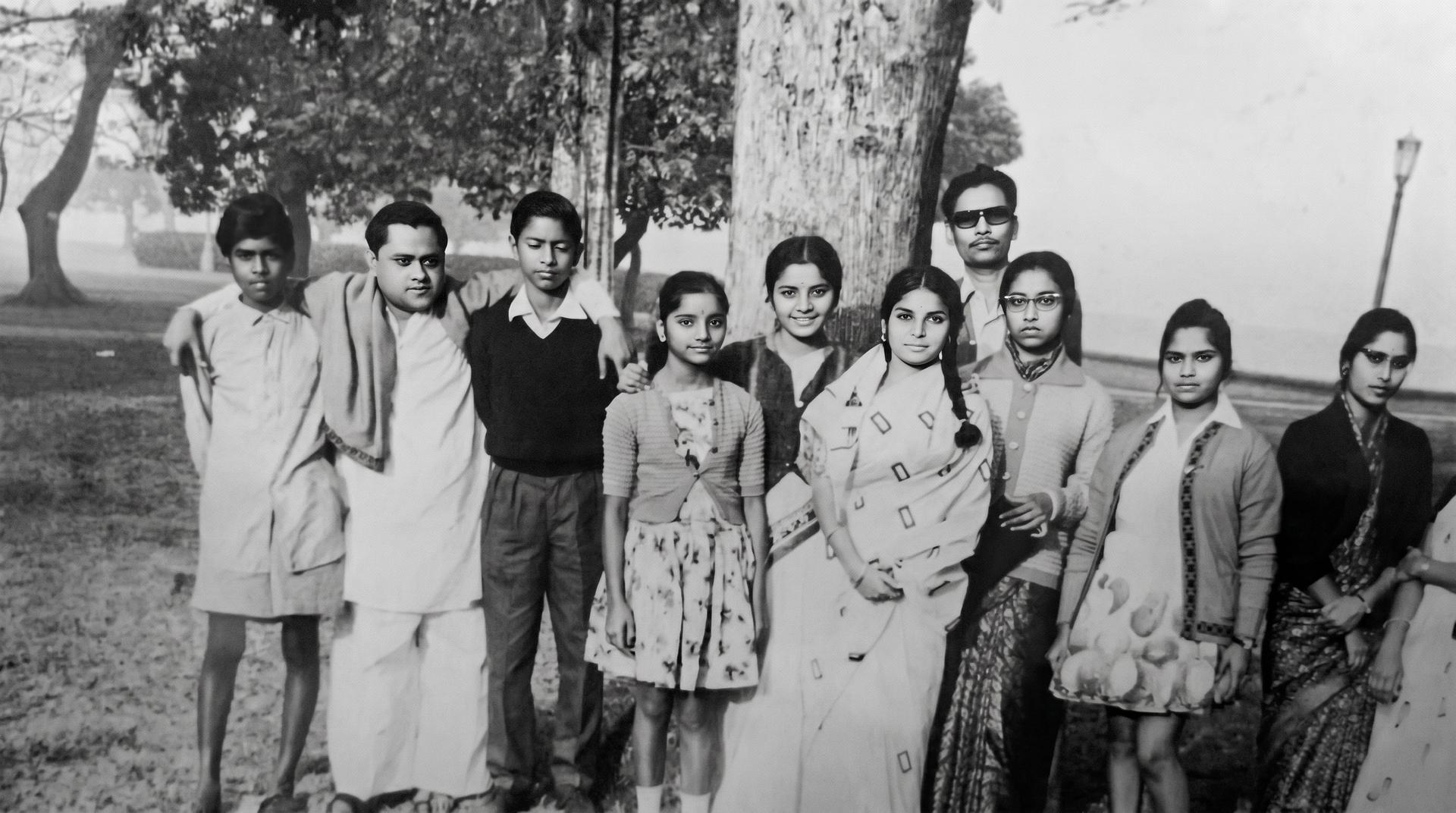
Victoria Memorial grounds was the picnic spot for Lily Chakraborty, Rakhee Gulzar and others
You have worked in Kolkata and Mumbai, what was the difference of atmosphere on the sets - then and now?
In both places there is a lot of bonhomie on the sets. I have always preferred to stay on the sets even when my shot is not there, to watch others and learn from them. It’s a habit I still have; I do not rush back to the make-up room.
Adda on the sets is normal. We have less time when films are shot but more time during serials. I still have these chats with the younger lot. I have noticed now the hero joins, but the heroine consciously tries to maintain a distance.
I developed very close relationships with people in Mumbai especially with producer NC Sippy who called me his Badi Beti. I used to go to his house often, have lunch with the entire family. I got them sweets from Kolkata and felt truly like a part of the family. I was doing theatre in Rangmahal when he called me to do the film, Inkaar, which was directed by his son Raj N Sippy. He said this film can’t take off without my Badi Beti and sent me the tickets.
I have not had such relationships with anyone in Kolkata. I have not gone to anyone’s home much. You can say this is also something I consciously maintained in Kolkata, I tried not to go overboard with anyone.
You have always looked after your family despite having such a busy schedule. How did you manage that?
I used to come home and cook because my husband wouldn’t eat otherwise. Sometimes I would come home at 10 pm and cook. If there was an early call time the next day, I would tell my hairdresser to have dinner with me, stay back at my place and then we would go to the sets in the morning together. Life used to be liked that.
I used to come home and cook because my husband wouldn’t eat otherwise. Sometimes I would come home at 10 pm and cook. If there was an early call time the next day, I would tell my hairdresser to have dinner with me, stay back at my place and then we would go to the sets in the morning. My husband did a lot for my family and I also financially took care of them till my brothers grew up. For a long time, we did not know that my father was earlier married to my aunt and three of our siblings were my aunt’s children. After her death, the family decided to marry off my mother to him. But this realisation never made any difference in the love we shared.
You are working at the age of 84, do you find it taxing?
I really love to be on the sets and feel very happy to be around young people. I enjoyed doing the role of the matriarch in the serial Neem Phuler Madhu but now I feel the stories of the serials are not going anywhere. That’s why I do not want to do serials anymore. But I am doing films and will start shooting for Abhigyan Mukherjee’s film, Anumaner Bhittite, soon.