Article
Home > Article
In 1964, Tapan Sinha’s Jatugriha ends with a woman’s refusal — she declines to reunite with her former husband, honouring a boundary once drawn. Two decades later, Gulzar’s Ijaazat shows an ex-wife seeking permission before moving forward with her new life. This fundamental divergence reveals cinema’s deepest question: not just who is looking, but how. On International Women's Day, filmmaker and writer DEBARATI GUPTA explores the female gaze — a way of seeing that transcends the male perspective itself. Drawing from three transformative Bangla films spanning 1937 to 1964, she uncovers how cinema can challenge patriarchal structures of representation and shows what becomes visible when we learn to decode a look differently?
Why BFA commissioned this piece:
The exploration of the female gaze is vital to reinterpreting the emotional and structural landscape of Bengali cinema’s heritage. A practicing filmmaker provides a visceral understanding of the craft, bridging the gap between artistic intent and technical execution. Consequently, the Bengal Film Archive commissioned filmmaker DEBARATI GUPTA to author this definitive study for International Women’s Day. Our archival mission centers on generating deep-dive, longform analyses that place cinematic gems in historical perspective. Since the nuances of the female gaze have remained largely unexplored in Bengal, Gupta’s unique vantage point as a contemporary creator offers an unprecedented look into these timeless narratives.
Before discussing women’s gaze in Bengali cinema, I wish to reference a personal experience, which will facilitate understanding the contextual dimensions of the subject. I had heard a peculiar argument from some male friends who dislike the legendary Uttam Kumar. Their grievance frequently centers not on his histrionic capabilities but on what they perceive as an “effeminate” and delicate grace. To these critics, Uttam’s demeanor — the specific tilt of his neck, the subtle application of kohl, and his moist, affectionate gaze toward his heroines — evokes the Tribhanga-Murari Krishna of the Kali Yuga, a figure that seemingly falls short of the rigid “ideal” masculine standards established in later decades.
This critique gained significant traction after the 1960s as the rise of Shammi Kapoor and Dharmendra in Hindi cinema began to prioritize physical aggression as a prerequisite for stardom, a trend that culminated in the 1970s with the Angry Young Man archetype. In Kolkata, the original Angry Young Man — Mrinal Sen — was making authentic, socio-politically grounded films such as “Interview” or “Padatik”. In Mumbai, Amitabh Bachchan was redefining the cinematic center through a lens of hyper-masculinity. Consequently, the appeal of the gentle lover personified by Uttam Kumar appeared to wane in the critical zeitgeist. Yet commercial data suggests his popularity remained remarkably resilient. This persistence invites a scholarly inquiry: did the historical Bengali collective consciousness specifically cultivate and desire a “feminized” cinematic world?
This inclination toward tenderness has permeated Bengali film since the 1930s and 40s. From the era of Durgadas Bandyopadhyay and Pramathesh Barua, the industry presented a lush, nuanced world that felt distinct even in its monochromatic rendering. To analyze this phenomenon, one must first decode how the male gaze manifests through visualization and how a female gaze positions itself in response.
Linguistically, the word “gaze” lacks a precise Bengali equivalent; while “seeing” denotes mere perception and “looking” implies a directed intent, “gazing” suggests a steadfast, unblinking stare — a concept deeply romanticized in Bengali culture. This is evident in the lyrics like “Aami cheye cheye dekhi saradin” (“Deya Neya”) or the spiritual yearning in “Cheye thaki, cheye thaki, Shyam tor tore, tomal tolae cheye thaaki” (“Hate Bajare”). Even Rabindranath Tagore famously wrote “Tumi khushi thako/amar pane cheye cheye khushi thako” to explore the transition from the physical to the ethereal through the act of being gazed upon, suggesting that the look itself is a site of joy.
However, the gaze is rarely an innocent act of appreciation. Jean-Paul Sartre argued that the gaze inherently commodifies the object of sight, rendering the observed party acutely self-conscious and creating an aggressive force of indirect oppression. Michel Foucault expanded upon this by describing the gaze as an asymmetrical mode of observation that establishes an unequal power dynamic between the observer and the observed.
Jean-Paul Sartre argued that the gaze inherently commodifies the object of sight, rendering the observed party acutely self-conscious and creating an aggressive force of indirect oppression
These philosophical foundations set the stage for Laura Mulvey’s seminal 1975 essay, “Visual Pleasure and Narrative Cinema”, which identified three distinct layers of the patriarchal lens: the perspective of the camera or director, the way the male character looks at the female character within the narrative, and the spectator’s gaze, which is conditioned to view women as objects of consumption. Establishing a female gaze, therefore, requires more than a mere shift in the gender of the observer.
At the premiere of “Mr. and Mrs. Iyer”, the most acclaimed female director of Bengal, Aparna Sen, stated that in her film, female gaze is evident in the depiction of violence. When Hindu rioters murdered an elderly Muslim couple (played by Bhisham Sahni and Surekha Sikri), rather than showing the murder directly, the film displayed the elderly man’s spectacles lying on the ground. To show this is not to evade reality, but rather to embody the manner in which a woman’s eyes refuse to witness and depict inhuman violence. Having stated this, Sen further remarked that even if the narrative necessitates depicting extreme masculine scenes, male gaze would display and desire to view them in one manner, while female gaze would not wish to do so.
A true female gaze is not the simple reversal of objectification; it does not seek “revenge” by turning the male body into a commodity. If the gaze is fueled by such retaliation, it remains a variation of the male gaze. Instead, it must be an entirely different voice — one accessible to any observer across the “rainbow” spectrum, including Cis-het men. Despite being a female director, the manner in which Farah Khan presented Shah Rukh Khan in “Om Shanti Om”, or the manner in which heroines are presented in her various films, is undoubtedly an example of the male gaze.
Satyajit Ray’s portrayals of characters like Charu in “Charulata” or Arati in “Mahanagar” frequently dismantled these patriarchal walls, offering a perspective that transcended the typical male lens. However, Satyajit Ray was the alternative figure — opposed to the mainstream Indian cinema — who had arrived to break those walls. Yet certain mainstream directors too created some female characters with such ease that calling them harbingers of the dawn of female gaze creation in Indian cinema would not, in my view, constitute great exaggeration.
If we examine certain such Bengali films carefully, perhaps my reasoning in this regard would find adequate justification. I wish to discuss three Bengali films and their female characters — “Vidyapati” (1937), “Indrani” (1958), and “Jatugriha” (1964).
In “Vidyapati”, the 1937-film directed by Debaki Bose, the spiritual companion of the great poet Vidyapati (Pahari Sanyal) is Anuradha (Kanan Devi). When the King of Mithila, Shiv Singh (Durgadas Bandyopadhyay), compliments this perpetually joyful woman as “beautiful”, Anuradha offers an articulate response — the king has made an error, and by no means is she beautiful.
Her dismissal of the king of Mithila’s compliments displays an effortless indifference that lacks any trace of resentment. She speaks these words with joyous ease, fearlessly, and with a casual dismissiveness toward the manner in which men regard her. Needless to say, such lines from a woman who inhabited the Bangla screen a century ago still send a shiver down the spine. Here is a young woman - entirely unfamiliar with feminist discourse — effortlessly dismissing the male gaze and giving us a preview of a completely different worldview.
I was startled further in the film’s climax. Nearly ninety years ago, Debaki Bose, through Anuradha, succeeded in constructing the image of an ideal friend. When queen Lakshmi Devi (Chhaya Devi) feels remorse for her extramarital affair with Vidyapati, Anuradha explains to her that the remorse arising from guilt is false. It is merely a form of fear imposed by society. And this fear is not of the mind but of the body. Therefore, people have deemed it sinful when the mind escapes beyond the body’s confines. She didn’t hesitate to remind the great poet Vidyapati that love’s supreme dharma can’t disregard humans. Like a perfect friend, Anuradha lends the triangular romantic entanglement between the king, queen, and poet a simple, natural, and humane face. This generous modernity and expansive concept of love was not something gleaned from the West. Rather, her assertion is rooted in Bengal’s indigenous Sahajiya-Vaishnava traditions—a humanistic view of love that predates Western feminist imports.
At the premiere of “Mr. and Mrs. Iyer”, the most acclaimed female director of Bengal, Aparna Sen, stated that in her film, female gaze is evident in the depiction of violence
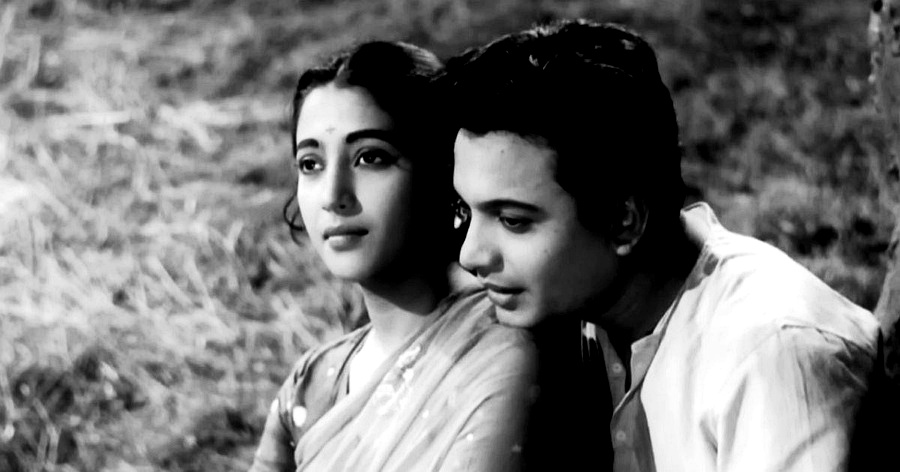
By 1958’s “Indrani”, the Uttam-Suchitra duo became the faces of a post-independence middle class seeking democratic liberation. Mainak Biswas has observed that films like “Harano Sur” created a "feminized" world where the hero was tender and sensitive. In “Indrani”, the heroine defeats the hero at chess and proposes marriage in a restaurant, offering to support the household while he is unemployed. Uttam Kumar’s willingness to portray Sudarshan — a failed, hesitant character — reflected a “counter-culture” inherent in the popular culture of the era.
“Indrani” is a 1958 film. A decade has passed since independence. The most profound national upheavals have occurred in Bengali life. Tagore had passed away and Netaji hadn’t returned home. In this period of breaking and building, Uttam-Suchitra became the face of the hope and aspiration of the Bengali middle class. From 1953-54, Uttam Kumar represented the modest young man coming from village to city during the era of nation-building and engage with the urban world in his own fashion. This invincible youth was not the Apu from “Aparajito” or the Ramu from “Padatik”. He was the lower-middle-class, fortune-seeking Bengali who came forward with the right to claim his own destiny.
Witnessing this youth standing straight and beaming with radiant smile, the average Bengali understood that he would fulfill the dreams of becoming a gentleman. Many accompanied this protagonist but the most devoted companion who could maintain a balance alongside Uttam’s stardom was Suchitra Sen. The films they did together — directed by Ajoy Kar, Niren Lahiri, Agradoot or Agragami — brought an assurance of a new democratic liberation to the newly independent yet divided Indian Bengali population. The moment Uttam and Suchitra, remaining rooted within the confines of family and society, fell in love, they created an entirely personal sphere without any interference from relatives. And even when such interference happened, they managed to overcome it. This space of personal freedom that they created represented the romanticism of the 1950s and 1960s in Bengali cinema. Needless to say, this romantic era was completely feminine in character.
In his 2000 essay, “The Couple and Their Spaces: Harano Sur as Melodrama Now”, Mainak Biswas writes: “We shall note a world in ‘Harano Sur’ that is feminine, and also now, historically feminized; an articulated female presence, the feminized quality of its emotional content the positively feminised quality of its male protagonist and… We shall suggest that the film produces a feminine subjectivity independent of the female subject in the story”.
Biswas demonstrates that the heroes of that period were soft, gentle, forgiving, and graceful. When the hero gazes at the woman of his desire, there mingles within it a kind of timidity that becomes all the more attractive in the eyes of the heroine and the spectator. I believe that within this explanation lies a counter-argument to my male friends’ disapproval. Perhaps the very absence of loudly asserted masculine behavior that causes them to dislike Uttam Kumar was itself a treasure of the great actor and Bengali culture alike.
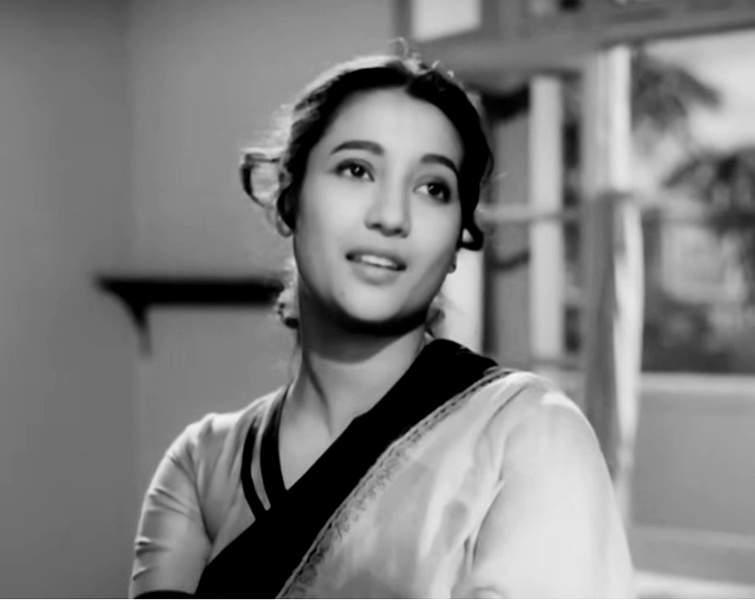
Niren Lahiri directed “Indrani” at a time when this feminine world of Bangla cinema was being created. Here, almost at the beginning of the acquaintance between Sudarshan and Indrani (Uttam and Suchitra), Suchitra Sen defeats the protagonist in a chess game. As the story progresses, and when the hero and heroine’s love reaches considerable height, while sitting in a restaurant, Indrani proposes marriage to Sudarshan. Sudarshan is somewhat hesitant because he has completed his MA and has been unemployed for two years. Indrani overcomes his hesitation, saying that she will work and maintain the household. It isn’t difficult to fathom the audacity of this proposal by simply glancing at contemporary hyper-masculine Hindi cinema.
When Indrani’s father reprimands her for wishing to marry an educated unemployed non-Brahmin boy, Indrani speaks against caste discrimination. When asked how an unemployed boy will feed her, she firmly states that she has studied in order to contribute to society, not to survive at others’ expense. All equations begin to reverse subsequently when she takes up a school job and begins maintaining a household with her unemployed husband. The husband’s disappointment and inferiority complex create a bitterness in married life that cannot be overlooked. This film might be called a commercial version of Satyajit’s “The Big City”. And the fact that Uttam Kumar, who had become a matinee idol, agreed to portray such a failed, hesitant, apparently cowardly character as Sudarshan, indicates something significant. It seems that Uttam took on such characters in commercial films because there existed a counter-cultural inclination within the popular culture of Bengal during that period.
Personally, I have found “Jatugriha” deeper than “Ijaazat”. Additionally, “Jatugriha” provides assurance of that feminized world we have discussed
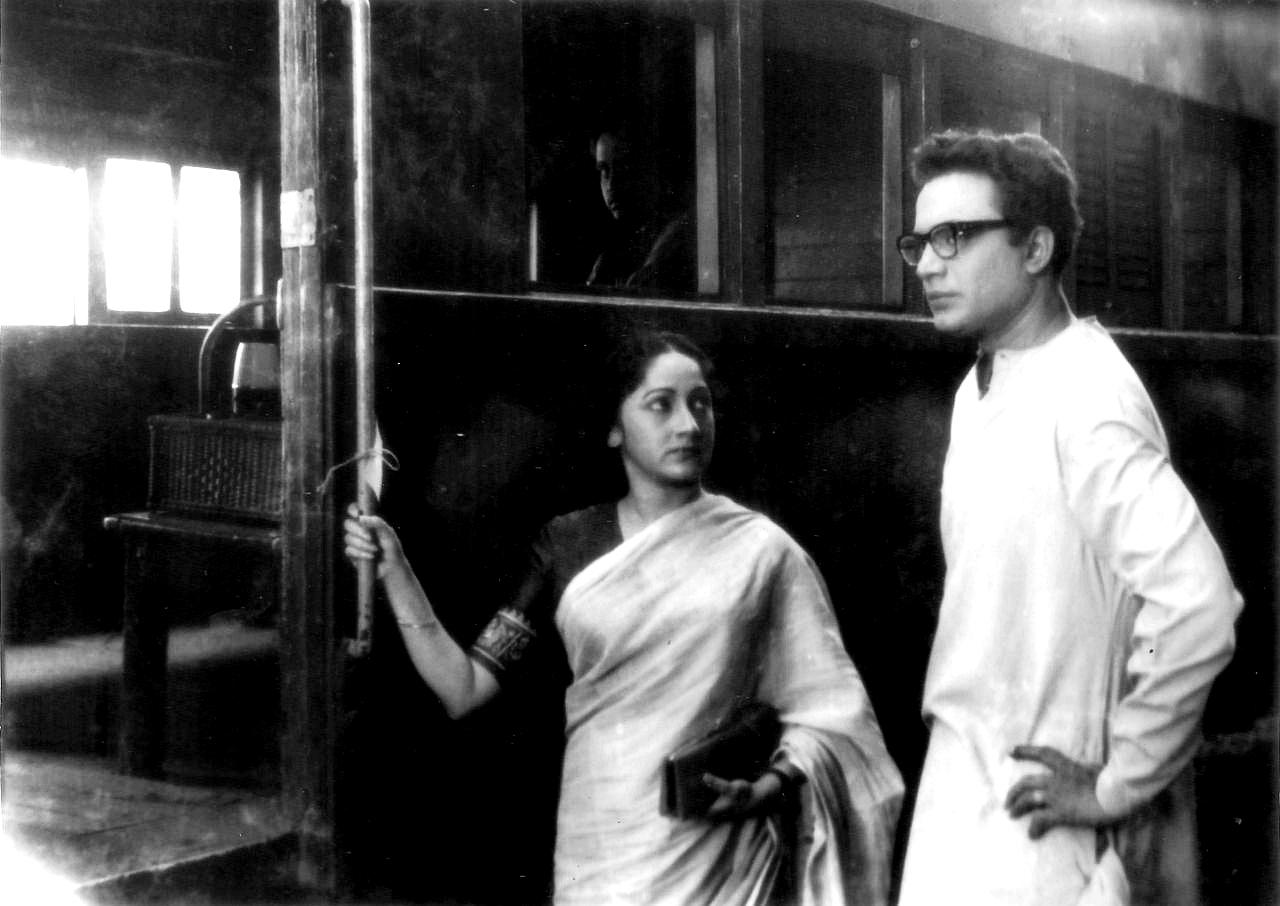
Tapan Sinha’s “Jatugriha” (1964) presents a remarkably modern portrayal of marital equality. Based on Subodh Ghosh’s work, this film remains, even after sixty-two years, remarkably modern and liberal. In this film, there is no need to portray gender equality through manner and gesture, form and implication, word or conduct. From the inception, the film portrays an equal world for the spouses. Both share the weight of their unhappiness equally. Shatadal and Madhuri (Uttam Kumar and Arundhati Devi) lack nothing in the provisions for well-being in their married life. Being childless by compulsion is their only void. When Madhuri’s inability to bear a child is disclosed, Shatadal proactively gets himself tested too. However, the doctor rules out any medical issues on his side. Though living peacefully together becomes unbearable when Madhuri falls into depression, Shatadal never accuses her. A mature separation without any one party being at fault is possible only in a liberal environment. Needless to say, the natural acting of Uttam Kumar and Arundhati Devi in “Jatugriha” rendered the film more realistic. The characters were truly helpless, and collectively made the viewers’ experience personal.
In this context, I wish to reference a popular Hindi film adaptation of “Jatugriha”. Gulzar’s “Ijaazat” was released in 1987. In this narrative, bitterness emerges between husband Mahendra and wife Sudha (portrayed by Naseeruddin Shah and Rekha) due to the presence of a second woman, Maya (Anuradha Patel), in Mahendra’s life. Later, several years after their separation, they encounter each other again in a waiting room of a railway station much like in “Jatugriha”. By then, Sudha has remarried. Before leaving the waiting room, Sudha touches Mahendra’s feet in salutation and seeks permission to depart.
“Jatugriha” concludes with Madhuri affectionately rejecting a reunion, choosing to respect the definitive boundary they had drawn. Personally, I have found “Jatugriha” deeper than “Ijaazat”. Additionally, “Jatugriha” provides assurance of that feminized world we have discussed.
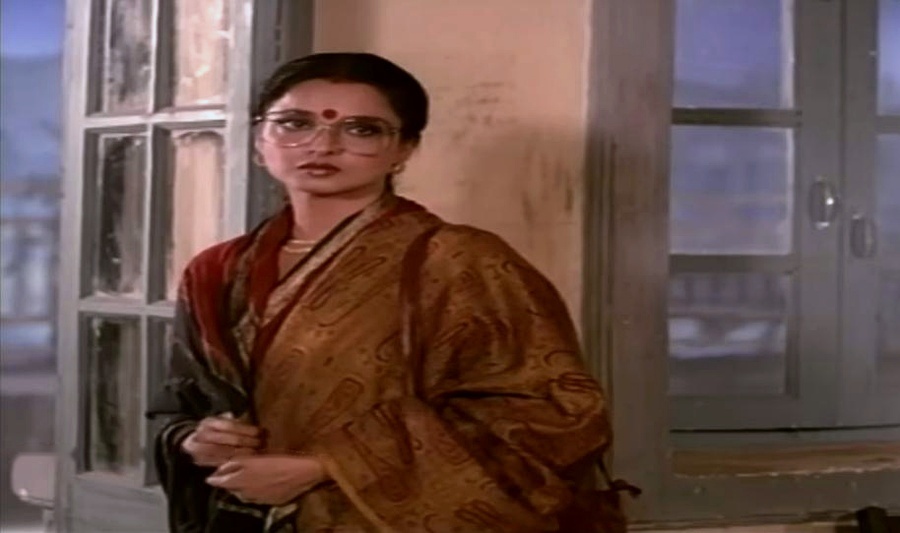
The act of looking back at memory is itself a form of gazing, a concept director Céline Sciamma defines as “Gaze as Memory”. Her film, ‘Portrait of a Lady on Fire” has been regarded by numerous gender studies researchers as an apt political celebration of the female gaze. Sciamma stated that the love story she wished to tell was actually a memory of incomplete love. Any act of remembrance is a form of gazing. “Tomar anginate berai jokhon abar jokhon berai na tokhono tumi amar pane cheye cheye khushi thako” – If we have to follow the path shown by Tagore where I must remain happy gazing at you, our gaze has to remain outside patriarchal power structures. At the end of "Jatugriha”, perhaps Madhuri wishes to gaze at Shatadal’s memory in that very manner.
Besides these three films, many other titles can be drawn from the treasure trove of old Bengali cinema. That includes “Harano Sur”, “Saat Pake Bandha”, and subsequently “Saptapadi”, “Pushpadhanu”, “Ami Se O Sakha”. All these are made by male directors.
Another amusing matter is that for a cis-het man sitting at a comfortable height within patriarchy to change his lens and narrate stories from a different perspective is as difficult as breaking through the Great Wall of China
Here, one must make something clear: by feminine or feminist gaze, we understand the lens of women. There is no disagreement in this view. Nearly 100 years ago, Virginia Woolf’s “A Room of One’s Own” taught us consciously to read how different the telling of a woman’s story in a woman’s voice could be. Thus films like “Chhuti”, directed by Arundhati Devi, or Aparna Sen’s “Parama’, provide directions from entirely different windows that have never been opened before. Perhaps films like “Harano Sur” or “Indrani” managed to create such an environment that the bolts on these new windows began to loosen.
Another amusing matter is that for a cis-het man sitting at a comfortable height within patriarchy to change his lens and narrate stories from a different perspective is as difficult as breaking through the Great Wall of China. Such liberal approach was possible in cinema since preparations for this had begun in Bengali social life from the 19th century onwards.
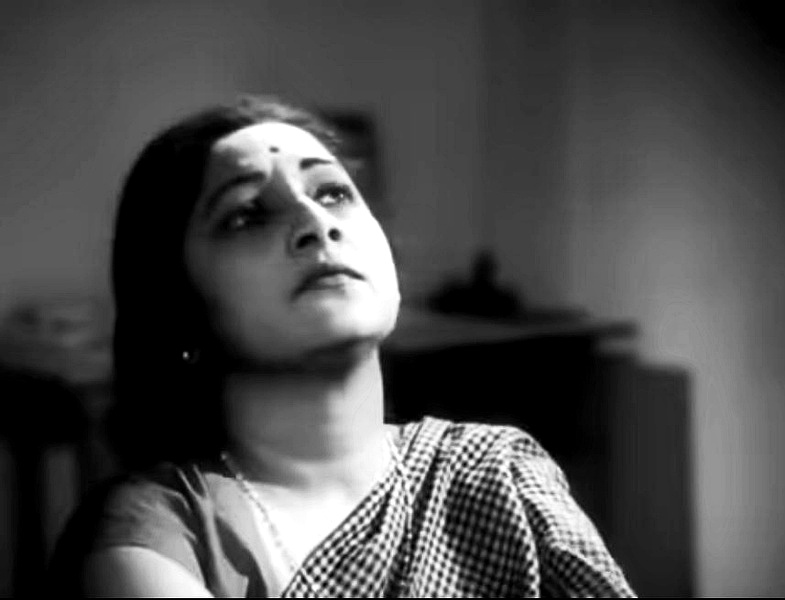
Let us return to the original discussion of the female gaze and examine how the three films I mentioned measure up adequately in this regard. Nearly a decade ago, American television director and screenwriter Joe Soloway (“Transparent”, “I Love Dick”) discussed three important concepts in an essay on “Female Gaze”— “feeling seeing”, “the gazed gaze’, and “returning the gaze”
“Feeling seeing” occurs when the camera becomes entirely subjective. The creator constructs a language wherein the viewer does not merely observe the character from outside, but rather effortlessly immerses themselves within the streams of their inner feelings and thoughts.
“The gazed gaze” creates an intimate connection with the viewer — as if the viewer is not merely observing the characters, but rather experiencing the sensation of themselves becoming the object of observation.
And “returning the gaze” is a conscious exchange of roles between the visual and the observer. This gaze disregards all attempts to see woman on screen merely as an object. Here the gaze of desire is not unidirectional; it is equally distributed between observer and character.
Combining these three concepts, Soloway regards “female gaze” as naturally fragile, personal, and contested — a vision that simultaneously transforms the experience of looking and becoming visible. According to the theory of Janette Vasandō, professor of Film at King's College London, this might perhaps be termed “the reciprocity of female gaze” — wherein the relationship of power between the presented person and the presenting person is relatively equal. In Professor Vasandō’s view, this is a distinctly feminist stance.
Thus the venerable Sartre’s words regarding the power politics of the word “gaze” refers only to the male gaze. Laura Mulvey elucidated how this gaze functions in cinema. The Golden Age of Bangla cinema demonstrated that a counter-political female gaze could be celebrated effortlessly. The Bengaliness of the post-Renaissance era that thrived in the post-colonial period created an atmosphere that cultivated a habit of living where the golden era of Bengali cinema could create a backdrop for this liberated female gaze vision to thrive.